
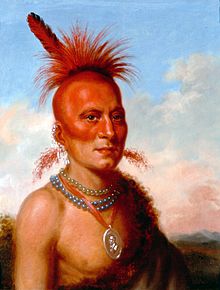
(Sarah Bond, my great great grandmother. She was a Native American woman of the plains states. Because of her I have life, This work is dedicated to her. My sobriety honors her Warrior Spirit.)
The Warrior Spirit is one piece of the image of God. Restoring the Warrior is central to Native American recovery. This article examines God the Warrior and the factors that contributed to the suppression of the Warrior Spirit among Native Americans.
If you have a Christian heritage, the Bible affirms that the Creator God is Warrior.
Exodus 15:3
“The LORD is a warrior; The LORD is His name.
Isaiah 42:13
The LORD will go forth like a warrior, He will arouse His zeal like a man of war He will utter a shout, yes, He will raise a war cry He will prevail against His enemies.
Native belief in the Creator Warrior is similar to Christianity.
When Native Americans were demilitarized, forced onto reservations, and deprogrammed in boarding schools, the Warrior Spirit was suppressed. The opportunity to express the Creator’s Image through the Warrior Spirit reawakened during world conflicts. Native Americans joined the United States military in greater percentage than non Native Americans. The time is now to awaken the Warrior Spirit for our sobriety.
The pursuit of the Warrior Spirit is the journey of conscious awareness. The bravery, strength, compassion for comrades, tribe, and country overcame the fear of battle and produced some of the greatest heroes in human history.
Your sobriety is heroic. You are reawakening the Warrior Spirit for our sobriety.
The Suppression of the Warrior Spirit
From the 1600s European Catholic and Protestant denominations sent missionaries to convert the tribes to Christianity. Some of these conversions occurred through government and Christian church cooperative efforts that forcibly removed Native American children from their families into a Christian/state government-operated system of American Indian boarding schools (aka The Residential Schools) where Native children were taught European Christian beliefs, the values of mainstream white culture, and the English language. This forcible conversion and suppression of Indigenous languages and cultures continued through the 1970s.
As part of the US government’s suppression of traditional Indigenous religions, most ceremonial ways were banned for over 80 years by a series of US Federal laws that banned traditional sweat lodge and sun dance ceremonies, among others.[4] This government persecution and prosecution continued until 1978 with the passage of the American Indian Religious Freedom Act (AIRFA).[5] wikipedia
“Our nation was born in genocide when it embraced the doctrine that the original American, the Indian, was an inferior race. Even before there were large numbers of Negroes on our shore, the scar of racial hatred had already disfigured colonial society. From the sixteenth century forward, blood flowed in battles over racial supremacy. We are perhaps the only nation which tried as a matter of national policy to wipe out its indigenous population. Moreover, we elevated that tragic experience into a noble crusade. Indeed, even today we have not permitted ourselves to reject or feel remorse for this shameful episode. Our literature, our films, our drama, our folklore all exalt it. Our children are still taught to respect the violence which reduced a red-skinned people of an earlier culture into a few fragmented groups herded into impoverished reservations.” Wikipedia
― Martin Luther King Jr.
The Carlisle Indian Industrial School, founded by the US Army officer Richard Henry Pratt in 1879 at a former military installation, became a model for others established by the Bureau of Indian Affairs (BIA). Pratt said in a speech in 1892, “A great general has said that the only good Indian is a dead one. In a sense, I agree with the sentiment, but only in this: that all the Indian there is in the race should be dead. Kill the Indian in him and save the man.”[13] Pratt professed “assimilation through total immersion.”[13]
As the model of boarding schools was adopted more widely by the US government, many Native American children were separated from their families and tribes when they were sent or sometimes taken to boarding schools far from their home reservations. These schools ranged from those similar to the federal Carlisle Indian Industrial School, which became a model for BIA-run schools; to the many schools sponsored by religious denominations.
In that period, when students arrived at the boarding schools, their lives usually altered dramatically. They were given short haircuts (a source of shame for boys of many tribes), uniforms, and English names; sometimes these were based on their own, other times they were assigned at random, and sometimes children chose new names. They were not allowed to speak their own languages, even between each other, and they were expected to attend church services and encouraged to convert to Christianity. Discipline was stiff in many schools (as it was in families and other areas of society), and it often included chores and punishments.[14]
The following is a quote from Anna Moore regarding the Phoenix Indian School:
“If we were not finished [scrubbing the dining room floors] when the 8 a.m. whistle sounded, the dining room matron would go around strapping us while we were still on our hands and knees.”[16]
The 1928 Meriam Report noted that infectious disease was often widespread at the schools due to insufficient funding for meals providing good nutrition, overcrowding, poor sanitary conditions (an element shared by many towns in the early 20th century) and students weakened by overwork. The report said that death rates for Native American students were six and a half times higher than for other ethnic groups.[16]wikipedia
Following is a list of boarding schools designed to remove the Warrior culture from Native children.
•Shawnee Boarding School, near Shawnee, Indian Territory, open 1876[95]–1918[96]
•Shawnee Boarding School, Shawnee, Oklahoma open 1923–61[25]
•Sherman Indian High School, Riverside, California[42]
•Shiprock Boarding School, Shiprock, New Mexico[41]
•Southwestern Indian Polytechnic Institute, Albuquerque, New Mexico[41]
•Spencer Academy (sometimes referred to as the National School of the Choctaw Nation),[97] near Doaksville, Choctaw Nation, Indian Territory open 1842–1900[98]
•Springfield Indian School, Springfield, South Dakota[41]
•Stewart Indian School, Carson City, Nevada[41]
•Sulphur Springs Indian School, Pontotoc County, Chickasaw Nation, Indian Territory[99] open 1896–98[25]
•Theodore Roosevelt Indian Boarding School, founded in 1923 in buildings of the U.S. Army’s closed Fort Apache, Arizona, as of 2016 still in operation as a tribal school[100]
•Thomas Indian School, near Irving, New York
•Tomah Indian School, Wisconsin[41]
•Tullahassee Mission School, Tullahassee, Creek Nation, Indian Territory opened 1850 burned 1880[101]
•Tullahassee Manual Labor School, Tullahassee, Creek Nation, Indian Territory open 1883–1914 for Creek Freedmen[101]
•Tushka Lusa Institute (later called Tuska Lusa or Tushkaloosa Academy),[77] near Talihina, Choctaw Nation, Indian Territory opened 1892 for Choctaw Freedmen[102]
•Tuskahoma Female Academy, Lyceum, Choctaw Nation, Indian Territory open 1892–1925[103]
•Wahpeton Indian School, Wahpeton, North Dakota, 1904–93. In 1993 its name was changed to Circle of Nations School and came under tribal control. Currently open.
•Wapanucka Academy (also sometimes called Allen Academy), near Bromide, Chickasaw Nation, Indian Territory Open 1851–1911 by the Presbyterian Church.[104]
•Wealaka Mission School Wealaka, Indian Territory open 1882–1907[105]
•Wewoka Mission School, (also known as Ramsey Mission School)[106] near Wewoka, Seminole Nation, Indian Territory Open 1868[107]–80[108] by the Presbyterian Mission Board.[80]
•Wheelock Academy, Millerton, Oklahoma[27] closed 1955
•White’s Manual Labor Institute, Wabash, Indiana Open 1870[109]–95 and operated by the Quakers[110]
•White’s Manual Labor Institute, West Branch, Iowa,[111] open 1881–87[112]
•Wetumka Boarding School, Wetumka, Creek Nation, Indian Territory Levering Manual Labor School transferred from the Baptists to the Muscogee (Creek) Nation in 1891 and they changed the name to the Wetumka Boarding School. Operated until 1910.[74]
•Wittenberg Indian School, Wittenberg, Wisconsin[41]
•Yellow Springs School, Pontotoc County, Chickasaw Nation, Indian Territory[113] open 1896–1905[25]
• Elliott Academy (formerly Oak Hill Industrial Academy), near Valliant, Oklahoma, 1912–36[58]
•El Meta Bond College, Minco, Chickasaw Nation, Indian Territory, open 1890–1919[59]
•Emahaka Mission, Wewoka, Seminole Nation, Indian Territory open 1894–1911[60]
•Euchee Boarding School, Sapulpa, Creek Nation, Indian Territory[27]open 1894–1947[61]
•Eufaula Dormitory, Eufaula, Oklahoma name changed from Eufaula High School in 1952.[62] Still in operation[63]
•Eufaula Indian High School, Eufaula, Creek Nation, Indian Territory[27]replaced the burned Asbury Manual Labor School.[34] Open in 1892[63]–1952, when the name changed to Eufaula Dormitory[62]
•Flandreau Indian School, South Dakota[41]
•Folsom Training School, near Smithville, Oklahoma open 1921[64]–32, when it became an all-white school[65]
•Fort Bidwell School, Fort Bidwell, California[41]
•Fort Coffee Academy, Fort Coffee, Choctaw Nation, Indian Territory Open 1840–63 and run by the Methodist Episcopal Church, South[50]
•Fort Shaw Indian School, Fort Shaw, Montana[41]
•Fort Sill Indian School (originally known as Josiah Missionary School), near Fort Sill, Indian Territory opened in 1871 by the Quakers,[66]remained open until 1980[67]
•Fort Totten Indian Industrial School, Fort Totten, North Dakota. Boarding and Indian Industrial School in 1891–1935. Became a Community and Day School from 1940 to 1959. Now a Historic Site run by the State Historic Society of North Dakota.
•Genoa Indian Industrial School, Genoa, Nebraska
•Goodland Academy & Indian Orphanage, Hugo, Oklahoma[27]
•Greenville School, California[41]
•Hampton Institute, began accepting Native students in 1878
•Harley Institute, near Tishomingo, Chickasaw Nation, Oklahoma Prior to 1889 was known as the Chickasaw Academy and was operated by the Methodist Episcopal Church until 1906.[46]
•Haskell Indian Industrial Training School, Lawrence, Kansas, 1884–present[42]
•Hayward Indian School, Hayward, Wisconsin[41]
•Hillside Mission School, near Skiatook, Cherokee Nation, Indian Territory open 1884[68]–1908 by the Quakers[69]
•Holbrook Indian School, Holbrook, Arizona[41]
•Ignacio Boarding School, Colorado[41]
•Iowa Mission School, near Fallis, Iowa Reservation, Indian Territory open 1890–93 by the Quakers[70]
•Intermountain Indian School, Utah
•Jones Academy, Hartshorne, Choctaw Nation, Indian Territory/Oklahoma[27] Opened in 1891[71]
•Koweta Mission School Coweta, Creek Nation, Indian Territory open 1843–61[72]
•Levering Manual Labor School, Wetumka, Creek Nation, Indian Territory Open 1882[73]–91, operated by the Southern Baptist Convention.[74]
•Many Farms High School, near Many Farms, Arizona
•Marty Indian School, Marty, South Dakota
•Mekasukey Academy, near Seminole, Seminole Nation, Indian Territory open 1891–1930[75]
•Morris Industrial School for Indians, Morris, Minnesota,[76] open 1887–1909
•Mount Edgecumbe High School, Sitka, Alaska, established as a BIA school, now operated by the State of Alaska
•Mount Pleasant Indian Industrial Boarding School, Mount Pleasant, Michigan,[27] 1893–1934
•Murray State School of Agriculture, Tishomingo, Oklahoma,[27] est. 1908
•Nenannezed Boarding School, New Mexico[41]
•New Hope Academy, Fort Coffee, Choctaw Nation, Indian Territory Open 1844 [50]–96[77] and run by the Methodist Episcopal Church, South[50]
•Nuyaka School and Orphanage (Nuyaka Mission, Presbyterian), Okmulgee, Creek Nation, Indian Territory,[27] 1884–1933
•Oak Hill Industrial Academy, near Valliant, Choctaw Nation, Indian Territory Open 1878[78]–1912 by the Presbyterian Mission Board. The Choctaw freedmen’s academy was renamed as the Elliott Academy (aka Alice Lee Elliott Memorial Academy) in 1912.[79]
•Oak Ridge Manual Labor School, near Holdenville, Indian Territory in the Seminole Nation. Open 1848–60s by the Presbyterian Mission Board.[80]
•Oklahoma Presbyterian College for Girls, Durant, Oklahoma[27]
•Oklahoma School for the Blind, Muskogee, Oklahoma[27]
•Oklahoma School for the Deaf, Sulphur, Oklahoma[27]
•Oneida Indian School, Wisconsin[41]
•Osage Boarding School, Pawhuska, Osage Nation, Indian Territory open 1874–1922[81]
•Park Hill Mission School, Park Hill Indian Territory/Oklahoma opened 1837[82]
•Pawnee Boarding School, Pawnee, Indian Territory, open 1878–1958[83]
List of Native American boarding schools[edit]
•Absentee Shawnee Boarding School, near Shawnee, Indian Territory open 1893–99[25][26]
•Albuquerque Indian School, Albuquerque, New Mexico[27]
•Anadarko Boarding School, Anadarko, Oklahoma open 1911–33[28]
•Arapaho Manual Labor and Boarding School, Darlington, Indian Territory opened in 1872 and paid with by federal funds,[29] but run by the Hicksite (Liberal) Friends and Orthodox Quakers.[30] Moved to Concho Indian Boarding School in 1909.[31]
•Armstrong Academy, near Chahta Tamaha, Indian Territory
•Asbury Manual Labor School, near Fort Mitchell, Alabama open 1822–30[32][33] by the United Methodist Missions.[32]
•Asbury Manual Labor School, near Eufaula, Creek Nation, Indian Territory, open 1850–88 by the United Methodist Missions.[34]
•Bacone College, Muscogee, Oklahoma,[27] 1881–present
•Bloomfield Female Academy, originally near Achille, Chickasaw Nation, Indian Territory. Opened in 1848 but relocated to Ardmore, Oklahoma around 1917 and in 1934 was renamed Carter Seminary.[35]
•Bond’s Mission School or Montana Industrial School for Indians, run by Unitarians, Crow Indian Reservation near Custer Station, Montana, 1886–97 [36]
•Burney Institute, near Lebanon, Chickasaw Nation, Indian Territory open 1854–87 when name changed to Chickasaw Orphan Home and Manual Labor School and operated by the Cumberland Presbyterian Church.[37]
•Cameron Institute, Cameron, Choctaw Nation, Indian Territory open 1893–early 20th century, was operated by the Presbyterian Church[38]
•Cantonment Indian Boarding School, Canton, Indian Territory run by the General Conference Mennonites[39] from September, 1882 to 1 July 1927[40]
•Carlisle Indian School, Carlisle, Pennsylvania,[41] open 1879–1918[42]
•Carter Seminary, Ardmore, Oklahoma 1917–2004 when the facility moved to Kingston, Oklahoma and was renamed the Chickasaw Children’s Village.[43]
•Chamberlain Indian School, Chamberlain, South Dakota[41]
•Chemawa Indian School, Salem, Oregon[27]
•Cherokee Female Seminary, Tahlequah, Cherokee Nation, Indian Territory open 1851–1910[44]
•Cherokee Male Seminary, Tahlequah, Cherokee Nation, Indian Territory open 1851–1910[44]
•Cherokee Orphan Asylum, Tahlequah, Cherokee Nation, Indian Territory opened in 1871[45]
•Cheyenne-Arapaho Boarding School, Darlington, Indian Territory opened 1871[30] became the Arapaho Manual Labor and Boarding School in 1879[29]
•Cheyenne Manual Labor and Boarding School, Caddo Springs, Indian Territory, opened 1879 and paid with by federal funds,[29] but run by the Hicksite (Liberal) Friends and Orthodox Quakers.[30] Moved to Concho Indian Boarding School in 1909.[31]
•Chickasaw (male) Academy, near Tishomingo, Chickasaw Nation, Oklahoma Opened in 1850 by the Methodist Episcopal Church and changed its name to Harley Institute around 1889.[46]
•Chickasaw Children’s Village, on Lake Texoma near Kingston, Oklahoma opened 2004[43]
•Chickasaw National Academy, near Stonewall, Chickasaw Nation, Indian Territory Open about 1865 to 1880[47]
•Chickasaw Orphan Home and Manual Labor School (formerly Burney Academy) near Lebanon, Chickasaw Nation, Indian Territory open 1887–1906[48]
•Chilocco Indian Agricultural School, Chilocco, Oklahoma, open 1884–1980[49]
•Chinle Boarding School, Many Farms, Arizona[41]
•Chuala Female Seminary (also known as the Pine Ridge Mission School), near Doaksville, Choctaw Nation, Indian Territory open 1838–61[50][51] by the Presbyterian Church[50]
•Circle of Nations Indian School [3], Wahpeton, North Dakota[41]
•Colbert Institute, Perryville, Choctaw Nation, Indian Territory open 1852–57 by the Methodist Episcopal Church, South[52]
•Collins Institute, near Stonewall, Chickasaw Nation, Indian Territory Open about 1885 to 1905[47]
•Concho Indian Boarding School, Concho, Oklahoma open 1909–83[53][54]
•Creek Orphan Asylum, Okmulgee, Creek Nation, Indian Territory opened 1895[55][56]
•Darlington Mission School, Darlington, Indian Territory run by the General Conference Mennonites from 1881 to 1902[57]
•Dwight Mission, Marble City, Oklahoma[27]
•Phoenix Indian School, Phoenix, Arizona[27]
•Pierre Indian School, Pierre, South Dakota[41]
•Pine Ridge Boarding School, Pine Ridge, South Dakota
•Pine Ridge Mission School, near Doaksville, Choctaw Nation, Indian Territory see Chuala Female Seminary
•Pinon Boarding School, Pinon, Arizona[41]
•Pipestone Indian School, Pipestone, Minnesota[41]
•Quapaw Industrial Boarding School, Quapaw Agency Indian Territory open 1872–1900[84]
•Rainy Mountain Boarding School, near Gotebo, Kiowa-Comanche-Apache Reservation, Indian Territory, open 1893–1920[85]
•Rapid City Indian School, Rapid City, South Dakota[41]
•Red Moon School, near Hammon, Indian Territory open 1897–1922[86]
•Riverside Indian School, Anadarko, Oklahoma open 1871–present[87]
•Sac and Fox Boarding School, near Stroud, Indiant Territory, open 1872[88]–1919[89] by the Quakers[88]
•Sacred Heart College, near Asher, Potowatamie Nation, Indian Territory open 1884–1902[90]
•Sacred Heart Institute, near Asher, Potowatamie Nation, Indian Territory open 1880–1929[90]
•St. Agnes Academy, Ardmore, Oklahoma[27]
•St. Agnes Mission, Antlers, Oklahoma[27]
•St. Boniface Indian School, Banning, California[91]
•St. Elizabeth’s Boarding School, Purcell, Oklahoma[27]
•St. John’s Boarding School, Gray Horse, Osage Nation, Indian Territory open 1888–1913 and operated by the Bureau of Catholic Indian Missions[92]
•St. Joseph’s Boarding School, Chickasha, Oklahoma[27]
•St. Mary’s Academy, near Asher, Potowatamie Nation, Indian Territory open 1880–1946[90]
•St. Louis Industrial School, Pawhuska, Osage Nation, Indian Territory open 1887–1949 and operated by the Bureau of Catholic Indian Missions[92]
•St. Mary’s Boarding School, Quapaw Agency Indian Territory/Oklahoma open 1893–1927[93]
•St. Patrick’s Mission and Boarding School, Anadarko, Indian Territory open 1892[94]–1909 by the Bureau of Catholic Indian Missions. It was rebuilt and called the Anadarko Boarding School.[28]
•San Juan Boarding School, New Mexico[41]
•Santa Fe Indian School, Santa Fe, New Mexico
•Sasakwa Female Academy, Sasakwa, Seminole Nation, Indian Territory open 1880–92 and run by the Methodist Episcopal Church, South[80]
•Seger Indian Training School, Colony, Indian Territory[41]
•Seneca, Shawnee, and Wyandotte Industrial Boarding School, Wyandotte, Indian Territory[27]
•Sequoyah High School, Tahlequah, Cherokee Nation, Indian Territory[27]
Our Spirituality is Faith in A Warrior Creator
We look back at our story so we can heal and then move forward to strength and renewal.
As you pray and practice your rituals today, can you connect to the Warrior strength in you to recover? To love your family and your people? Will you permit the Warrior Spirit to move you to the Creator, a wellbriety meeting, a healthy friendship, and your therapist to overcome and stay sober?
Look at the first of The Seven Philosophies for Native American women. You will see the Warrior emerge in this story.
Seven Philosophies for Native American Women: #1
You are sacred.
You are the life giver.
You were born to be absolutely worthy of all.
You are a spiritual being as well as a human being.
Here are some beautiful passages from the Red Road on connecting with the Warrior Creator.
-1- Rise with the sun to pray. Pray alone. Pray often. The Great Spirit will listen, if only you speak.
Bison, White (2012-04-23). The Red Road to Wellbriety: In The Native American Way (Kindle Locations 4715-4716). . Kindle Edition.
I am loved. (The Warrior) Creator loves me, and so, I can love others and not be afraid of what I’m not, or what I am, or about what’s coming around the next corner. I can feel the Creator’s breath on my cheek, and I can feel the heartbeat of the Creation beneath my heart. Is life perfect? Not yet, but life is good. It’s about progress….And progress comes a step at a time as I follow this path I have been given to walk on this living Circle. Wa’do
Bison, White (2012-04-23). The Red Road to Wellbriety: In The Native American Way (Kindle Locations 4592-4598). Kindle Edition.
6-The (Warrior) Creator: Relationship with the (Warrior) Creator is the sixth principle that is a focus of Indian life. As Indian people, our tribes or Nations have hundreds of different words in our own languages signifying what we mean when we say Creator. I realize we make no gains without the Great Spirit being in our lives. Neither I, nor anything we do, will work without our Creator. Being Indian and being spiritual has the same meaning. Spirituality is our gift from the Great One. This day, I vow to walk the Red Road. As an Indian man, woman, or youth I will return to the traditional and spiritual values that have guided my ancestors for the past generations. I will look with new eyes on the powers of our ceremonies and religious ways, for they are important to the very survival of our people. We have survived and are going to grow and flourish spiritually. We will fulfill our teachings and the purpose that the Creator has given us with dignity. Each day, I will pray and ask for guidance. I will commit to walk the Red Road, or whatever the spiritual way is called in my own culture. If I am Christian, I will be a good one. If I am traditional, I will walk this road with dedication. If each of us can do these things then others will follow. From this day forward, I will reserve time and energy for spirituality, seeking to know the (Warrior) Creator’s will.
Bison, White (2012-04-23). The Red Road to Wellbriety: In The Native American Way (Kindle Locations 4674-4688). . Kindle Edition.
 Hope Experience